

How To Install Metal Garden Edging
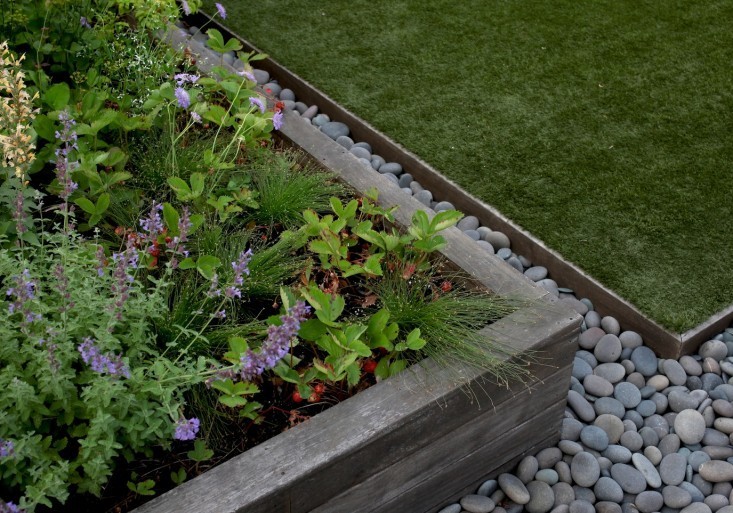
For more of her garden, see Garden Visit: Julie Farris's Rooftop Meadow in Brooklyn.

Above: Much stronger than bender board, metal landscape edging offers a thinner profile, typically from 1 to 2 mm (about 1/8 inch thick). Because it is produced with a uniform thickness and weight, metal offers a structural strength not found in other materials. It can even be used as paver edging.
How to install metal landscape edging?
Metal landscape edging typically comes in long strips (eight to 10 feet) that have overlapping connections. The standard heights range from three to five inches high, the choice of which depends on how much protrusion above the soil is desired. For stability and to best contain creeping grass roots, it is recommended to submerge metal edging two to three inches below grade. This usually will allow a sufficient edge above ground to retain mulch or gravel.
To install, check your soil. If it's fairly soft, you can simply use a wood block placed on top of the edging to pound it to the desired depth. If the soil is hard, first dig a slim trench in which to bury edging. Some metal edgings come with built-in anchors or slots for inserting metal stakes, which makes installation even easier.
How much does metal landscape edging cost?
More expensive than bender board or plastic edging products, metal edging is still an economical option. Part of its value rests in its longevity. For off-the-shelf metal edging, prices generally range from $2.50 to $6.50 per foot depending on thickness, height, the anchoring system, and brand. It can be found at home improvement stores, landscape suppliers, and online. Some of the major brands include Col-Met and Ever Edge for steel edging; Permaloc for aluminum; and Sure-Loc, which offers both aluminum and steel edging products.
What are the styles of metal landscape edging?
Cast iron edging for lawns and gardens has been around for centuries. Typically resembling small fencing in classically ornamental designs, cast iron edging is as easy to install, as durable, and as maintenance-free as low-profile metal edging. Looks come at a price; cast iron edging is far more expensive than standard metal edging. Consider sleuthing at garden and architectural salvage yards.

Metal Landscape Edging Recap
Pros
- Durable and strong
- Long-lasting
- Maintenance free
- Easy to shape and install
- Offers a clean and unobtrusive appearance
- Fits into different landscape styles
Cons
- Not a highly decorative garden element
- Untreated steel edging will rust
If you're embarking on a landscape project, see our Hardscape 101 design guides, including Gravel 101. For more inspiration, see:
- Ask the Expert: 8 Ways to Add Pattern to a Landscape
- 10 Genius Garden Hacks with Concrete
- Hardscaping 101: Ribbon Driveways
- And if you're designing a garden path or a driveway, see our earlier posts on materials including Concrete Pavers, Seashell Paths and Driveways, Pea Gravel, and Decomposed Granite.
How To Install Metal Garden Edging
Source: https://www.gardenista.com/posts/hardscaping-101-metal-landscape-edging-pros-and-cons/
Posted by: tiradomanter.blogspot.com
0 Response to "How To Install Metal Garden Edging"
Post a Comment